

Jacqueline Lamba “Ace of Revolution – Wheel”, karta z talii Jeu de Marseille, tusz na papierze, 1941. Wystawa “Surrealism and Magic: Enchanted Modernity”, Peggy Guggenheim Collection. Wenecja 2022
“The two eldest, Hector and Tommy, lithe and vigorous adolescents, each carried in a solid tambourine six dark-colored rubber balls. They walked in opposite directions and soon turned to face each other, stopping at two very distant points. (…) This first feat accomplished, each juggler began bouncing individual balls back to his opposite number, effecting a constant exchange that now continued without interruption. The tambourines vibrated in unison, and the twelve projectiles formed a kind of elongated arc in perpetual motion. Thanks to the perfect synchronicity of their movements, combined with a marked physical resemblance, the two brothers (one of whom was left-handed) gave the illusion of a single person reflected in a mirror. For several minutes the tour de force went on with mathematical precision. Finally, at a new signal, each player caught half the projectiles in the hollow of his upturned tambourine, abruptly ending the to and fro.
Immediately, Marius Boucharessas, a bright-looking ten-year-old, ran forward while his two older brothers cleared the area. The child carried in his arms, on his shoulders, and even on top of his head a collection of young cats, each wearing a red or green ribbon around its neck. (…) At a sign from Marius, the graceful felines began a frolicsome game of Prisoner’s Base. To begin, one of the greens ran up to the red camp and three times, with the tips of its barely unsheathed claws, tapped the paw that one of its adversaries extended; at the last tap it swiftly ran away, chased close behind by the red, which tried to catch it. (…) Fast-paced and captivating, the game went on without any infractions of the rules. The prisoners, in two symmetrical and lengthening rows, sometimes saw their number decrease when a player’s skillful tag was able to deliver one of its teammates. Such alert runners, if they reached the opposing camp unhindered, became untouchable during their stay over the line they’d crossed in glory. Finally, the group of green prisoners grew so large that Marius imperiously decreed the red team the victors. The cats, without a moment’s delay, went back to the child and scampered up his body, taking the places they’d had on arrival.
As he walked away, Marius was replaced by Bob, the last of the brothers, a ravishing blond boy of four with big blue eyes and long curly hair. With incomparable mastery and miraculously precocious talent, the charming lad began a series of impressions accompanied by eloquent gestures. The sounds of a train picking up speed, the cries of various domestic animals, the shriek of a blade against a whetstone, the sudden pop of a champagne cork, the gurgling of poured liquid, fanfares of a hunting bugle, a violin solo, and the plaintive notes of a cello formed a staggering repertoire that could give whoever momentarily shut his eyes the illusion of total reality. The prodigy took his leave to rejoin Marius, Hector, and Tommy.
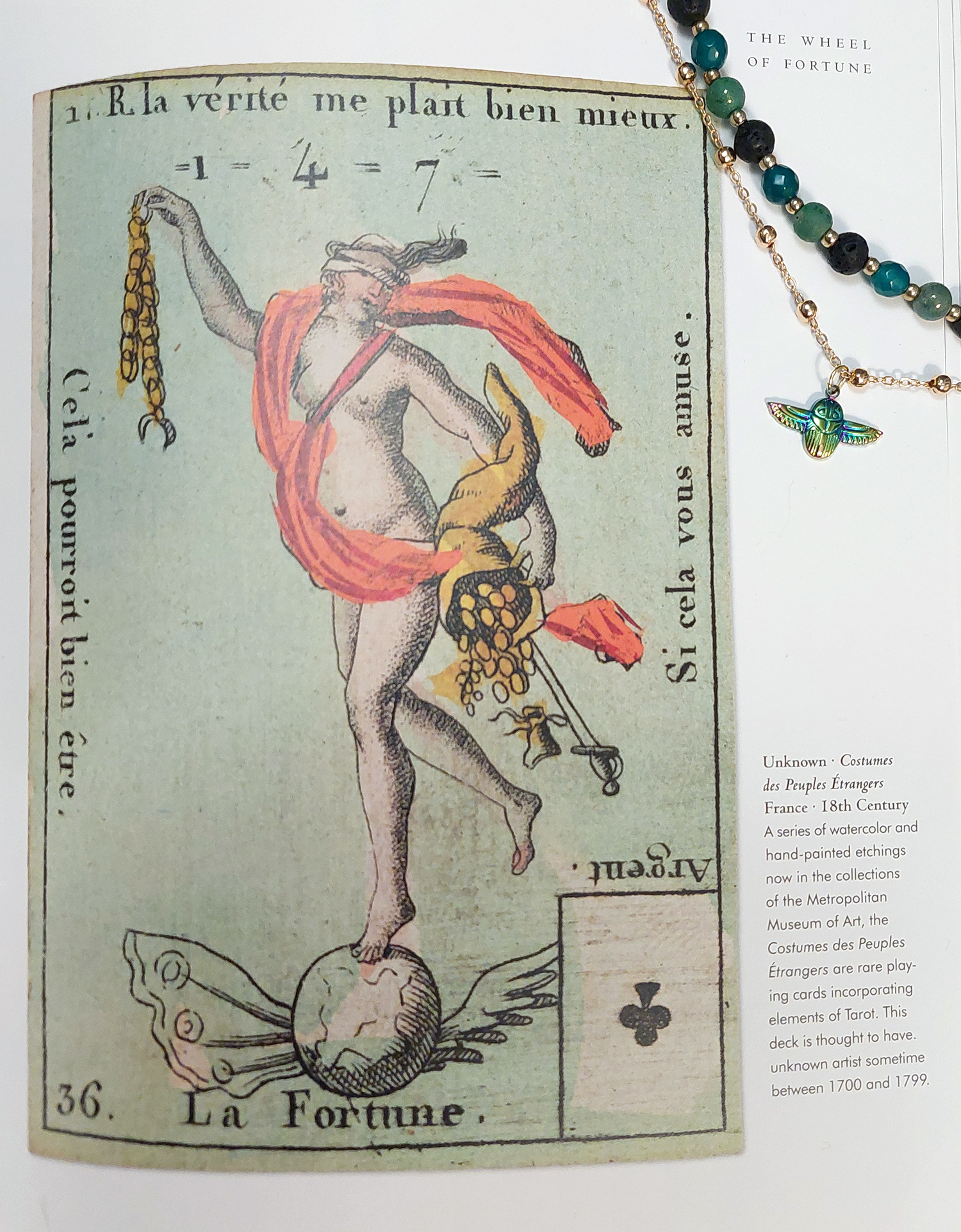
Soon the four brothers moved aside to let through their sister Stella [The Star], a charming adolescent of fourteen, who, dressed as Fortune, appeared balancing on the crest of a narrow wheel that she kept in constant motion beneath her feet. Rolling smoothly, the girl began turning the narrow rim in every direction, pushing off with the tips of her heels in an uninterrupted series of small hops. In her hand she held a large, deep, convoluted horn of plenty, from which money made of light, shining paper poured forth like a shower of golden coins and floated slowly to the ground, producing no metallic echo. The louis, double louis, and large hundred-franc disks formed a sparkling train behind the lovely traveler, who, maintaining a smile on her lips and her place on the wheel, performed miracles of equilibrium and speed. As with certain magician’s cones that endlessly disgorge an infinite variety of flowers, the reservoir of coins seemed inexhaustible. Stella had only to shake it gently to sow its riches, a thick, uneven bed soon partially crushed by the circumnavigations of the errant wheel.”
Raymond Roussel Impressions of Africa (1910), translated by Mark Polizzotti (2011)
Ilustrations: Jessica Hundley Tarot (2021)
 W miasto